
Description
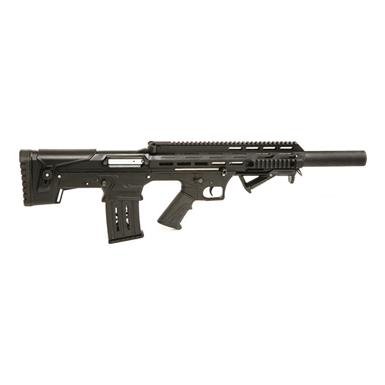
Panzer Arms BP-12 bullpup shotgun Arms BP-12 Bullpup Semi-automatic 12 Gauge: A Responsible, High-Level Overview of a Compact 20″ Shotgun Platform
The Panzer Arms BP-12 bullpup shotgun Arms BP-12 bullpup semi-automatic 12 gauge with a 20″ barrel, 3″ chamber, and 5+1 capacity is the kind of shotgun that draws attention because it compresses a traditionally long, front-heavy tool into a compact, rear-balanced format designed for maneuverability. Bullpup shotguns place the action and magazine area farther back, closer to the shooter’s shoulder, which changes the weight distribution and can make a 20″ barrel feel more controllable in tight spaces compared with conventional layouts. In online discussions, models in the BP-12 class are often described in energetic, sometimes over-confident terms, yet a responsible overview begins with fundamentals rather than hype: understanding how a bullpup semi-automatic shotgun differs from a traditional shotgun, what “semi-automatic” really means for recoil and reliability expectations, how to approach safety and lawful ownership, and what practical realities first-time owners should consider before they ever take a shotgun to the range. This is not a sales pitch and it does not provide buying guidance; it is a structured, compliance-first explanation of the platform’s characteristics, why it interests certain shooters, and what responsible use requires.
What “Bullpup Semi-Automatic 12 Gauge” Means in Real Life
A bullpup shotgun rearranges the geometry of the firearm so that the firing action and feeding system sit behind the trigger group, allowing the overall length to shrink while retaining a full-length barrel, such as the 20″ barrel common in the BP-12 category. That design choice is more than a stylistic quirk, because it changes how the shotgun moves, how it is shouldered, and how it is controlled through recoil. Semi-automatic operation, meanwhile, means the shotgun uses energy from each shot to cycle the action, load the next shell, and reset for a subsequent trigger pull, rather than requiring a manual pump stroke. In principle, that can provide smoother follow-up shots and a different recoil sensation than some pump shotguns, but it also introduces variables that matter: ammunition selection within manufacturer guidance, maintenance discipline, and how cleanly the action is kept. Many new shooters assume “semi-auto” equals “effortless,” yet in reality semi-automatic shotguns are machines that demand correct setup and care, and the bullpup layout adds an additional layer of ergonomics and control learning that a first-time owner must respect.
Overview of the Arms BP-12 Configuration: 20″ Barrel, 3″ Chamber, and 5+1 Capacity
A 20″ barrel in a 12-gauge shotgun is often viewed as a practical middle ground between compact handling and effective patterning for many lawful sporting and range uses, and in a bullpup platform that barrel length can feel even more compact because the overall length is reduced compared with a conventional stock arrangement. The 3″ chamber designation signals compatibility with both 2¾” and 3″ shells when used appropriately, which can broaden the range of ammunition types a shooter might use within safe and lawful contexts. The 5+1 capacity simply describes the number of shells the system holds, and while capacity tends to attract attention in online conversation, responsible ownership should treat it as a neutral specification rather than a selling point. Capacity does not replace safe handling, it does not replace lawful compliance, and it certainly does not replace structured training and a secure storage plan. What it does influence is the rhythm of range practice, the cadence of loading and unloading, and the importance of disciplined muzzle control during any manipulation of the firearm.
Build Quality and Practical Reliability: What Responsible Evaluation Looks Like
Quality in a shotgun like the BP-12 is not best measured by aggressive marketing terms, because what matters most is predictable function over time, safe mechanical integrity, and consistency of operation in real use. A responsible evaluation focuses on how securely the firearm is assembled, how smoothly the action cycles, how consistent the trigger feels, and whether the controls can be manipulated safely and deliberately under calm conditions. In bullpup designs, it is especially important to assess how the placement of controls affects safe handling, because the shooter’s hands and face are positioned differently than on a traditional shotgun. The most useful concept of quality is not simply “does it look good,” but “does it function consistently when maintained properly and used with appropriate ammunition.” Even then, no firearm is immune to malfunction, and reliability is a partnership between design, maintenance, ammunition selection, and shooter technique. For first-time buyers, the best approach is to think in systems: the shotgun itself, the training program, the safe storage setup, and the ongoing maintenance routine all combine into the real ownership experience.
Maintenance Expectations: Why Semi-Automatic Platforms Reward Discipline
Semi-automatic shotguns can be extremely satisfying to shoot when they are well-maintained and paired with ammunition that cycles the action reliably, but the trade-off is that they can become less forgiving when neglected. A responsible owner should be prepared to follow a sensible cleaning and lubrication routine, inspect wear surfaces, and ensure that magazines or feeding components are kept in good condition. The bullpup layout does not change the underlying truth that carbon buildup, poor lubrication, and inconsistent ammunition can lead to cycling issues. The difference is that in a compact, rear-balanced format, some maintenance tasks can feel less familiar to shooters who have only handled conventional shotguns, so there is extra value in reading the manual, learning the correct disassembly sequence, and building a routine that is realistic to maintain long-term. In this sense, quality becomes something the owner sustains rather than something they merely purchase.
Ergonomics and Handling: The Bullpup Learning Curve
One of the most important realities of a bullpup shotgun is that it feels different, sometimes dramatically, from a conventional shotgun. The rearward weight distribution can make the front end feel lighter, which may help some users move the muzzle with less fatigue, but it can also change the way the shotgun swings on moving targets and the way recoil is perceived through the shoulder. Control placement, including safety and magazine or loading controls, can feel unfamiliar, and unfamiliar controls are a safety risk if a shooter tries to “figure it out on the fly.” That is why a responsible user learns the manual of arms—how to verify empty, how to load, how to unload, how to clear malfunctions—in a safe, controlled environment before ever attempting live fire. For experienced shooters, the bullpup layout can be an engaging variation that rewards practice and familiarity. For first-time owners, it should be approached with humility, patience, and structured training so that novelty never overrides safety.
Safe Handling, Secure Storage, and Legal Compliance Come First
A shotgun is not a lifestyle accessory, and the more “tactical” a platform looks, the more important it is to ground the conversation in safety and legality. Regardless of barrel length or capacity, safe handling rules remain the foundation: the muzzle must be controlled at all times, the trigger finger stays indexed off the trigger until a deliberate shot is intended, and every loading or unloading step must be done with care and awareness. Secure storage is equally essential, particularly in homes with children, visitors, or roommates who are not trained. Responsible storage means preventing unauthorized access through a locked safe or secure cabinet, and ensuring that the shotgun is stored unloaded in accordance with local laws and best practices. Legal compliance is not optional; firearm laws can vary significantly by jurisdiction, and they may include regulations about transport, storage, use, and permissible configurations. The only responsible approach is to verify current rules through official sources and seek qualified legal advice when needed, rather than relying on social media claims or hearsay.
Range Use and Responsible Skill Building
For many lawful owners, a bullpup semi-automatic 12 gauge is primarily a range platform, and the range environment is where safe habits are built and verified. Responsible practice starts with basic familiarity: learning the shotgun’s controls, practicing loading and unloading procedures, and developing safe muzzle discipline during all manipulation. The next layer is controlled firing: beginning with manageable ammunition within manufacturer guidance and focusing on fundamentals like stance, shoulder placement, and recoil control. Shotguns can be deceptively demanding because recoil management and follow-through matter, and semi-automatic systems can encourage a faster pace than a shooter is ready for if they mistake cycling speed for competence. A premium, safety-forward perspective values slow, deliberate progress that builds confidence through repetition and structure, rather than speed or bravado.
“Potency,” “Terpenes,” and “Extraction” Don’t Apply Here—But Consumer Trust Still Does
You asked for sections like potency, extraction or cultivation process, and terpene profile, which are meaningful in cannabis product pages, but they do not apply to firearms in any factual way. Trying to force those concepts into a shotgun description would be misleading and would undermine credibility. The closest responsible equivalent is to translate your usual cannabis-page framework into an ethical, truthful firearm-education framework: instead of potency, we talk about recoil characteristics and functional capability; instead of extraction, we talk about mechanical operation and maintenance; instead of terpenes and flavor, we talk about ergonomics, handling, and user experience; instead of effects, we talk about practical performance and the importance of training. This approach preserves the premium, humanized brand voice while maintaining accuracy and compliance, which is exactly what builds trust in regulated spaces. If your website’s audience overlaps between lifestyle, outdoor culture, and legal ownership topics, this kind of honest translation keeps the content cohesive without inventing claims.
Table: Responsible Ownership Framework for a Bullpup Semi-Automatic 12 Gauge
| Category | What to Evaluate | Why It Matters |
|---|---|---|
| Safety and handling | Familiarity with controls, safe loading/unloading, muzzle discipline | Prevents accidents and builds competent habits |
| Reliability expectations | Proper maintenance, appropriate ammunition, realistic testing at the range | Reduces malfunctions and supports safer operation |
| Ergonomics | Shoulder fit, reach to controls, comfort under recoil | Improves control and reduces unsafe fumbling |
| Storage and access control | Locked storage plan, household rules, transport routines | Prevents unauthorized access and reduces theft risk |
| Legal compliance | Local rules for possession, transport, and use | Avoids accidental violations and long-term consequences |
FAQs About the Arms BP-12 Bullpup Semi-Automatic 12 Gauge
Is a bullpup shotgun a good choice for a first-time owner?
A bullpup shotgun can be owned responsibly by a first-time owner, but it generally requires extra patience and training because the control layout and handling dynamics can be less intuitive than a traditional shotgun. A first-time owner should prioritize formal instruction, safe storage, and calm, structured practice rather than relying on novelty or online hype.
Does the 3″ chamber mean I should always use 3″ shells?
No. A 3″ chamber indicates compatibility with 3″ shells when used appropriately, but the correct shell length and load depend on manufacturer guidance, the intended lawful use, and the shooter’s recoil tolerance and training level. Responsible shooters choose ammunition that supports safe control and reliable function, not simply the largest available option.
Are semi-automatic shotguns harder to maintain than pumps?
Semi-automatic shotguns can require more consistent cleaning and lubrication to maintain reliable cycling, because the action depends on energy transfer and internal movement that can be affected by residue and friction. That does not make them “bad,” but it does mean owners should be prepared to maintain them properly and avoid neglect.
How do I reduce the risk of scams and misinformation online?
The safest approach is to avoid relying on anonymous listings or pressure tactics, verify information through reputable sources, and prioritize lawful channels for any firearm-related decisions. More broadly, treat any claim that sounds exaggerated, rushed, or too good to be true as a signal to slow down and verify.
What should I focus on first at the range?
Start with safe handling and manipulation, including loading, unloading, and verifying the shotgun is empty, then work on stance, shoulder placement, and controlled single shots with appropriate ammunition. The goal is safe, repeatable competence before speed.
Reviews
There are no reviews yet.